
In a world of endless scrolling and shrinking attention spans, shouting louder doesn’t work.
Your customers are bombarded with claims of “quality” and “innovation” every second. So, how do you actually get them to pause and remember you?

The answer isn’t a louder ad—it’s a better story. A brand storytelling strategy is the long game of building a narrative that makes people feel understood, not just targeted. It turns your product from a commodity into a meaningful part of your customer’s life.
Here are the direct, strategic steps to build a story that sticks, based on the latest insights.
- Start with Real Insight, Not Assumptions
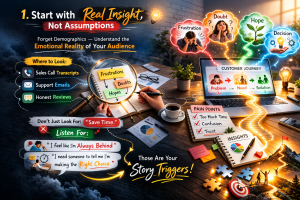
Forget demographics for a moment. Strong stories live in the emotional reality of your audience. You need to understand their daily frustrations, quiet doubts, and unspoken hopes.
- Where to Look: Dive into sales call transcripts, support emails, and honest reviews. Listen for the emotional language people use when they describe their problems.
- Don’t Just Look For: “Save time.”
- Listen For: “I feel like I’m always behind” or “I need someone to tell me I’m making the right choice.” Those are your story triggers.
- Define Your Core Story Pillars
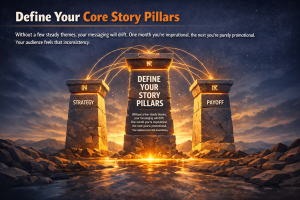
Without a few steady themes, your messaging will drift. One month you’re inspirational, the next you’re purely promotional. Your audience feels that inconsistency.
- Strategy: Define 3-4 core narrative themes that will guide all your content. These are the consistent ideas you will always come back to.
- Examples: “Clarity in a complex world,” “Empowering the underdog,” or “The beauty of simple, thoughtful design.”
- Payoff: Every piece of content, from a blog post to a social video, can be filtered through these pillars, ensuring a cohesive and recognizable brand story.
- Make the Customer the Hero (You’re Just the Guide)
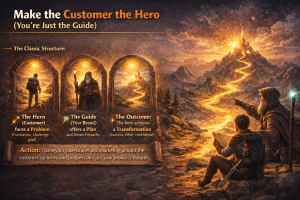
This is the most critical shift. Too many brands put themselves at the center of the story. In a powerful narrative, your customer is the hero, and your brand is the wise guide who helps them succeed.
- The Classic Structure:
- The Hero (Customer) faces a Problem (frustration, challenge, goal).
- The Guide (Your Brand) offers a Plan and shows Empathy.
- The Outcome: The hero achieves a Transformation (success, relief, confidence).
- Action: Frame your case studies and marketing around the customer’s journey and progress, not just your product’s features.
- Find Your Authentic Voice
Your brand’s voice is how your story is told. It should feel like a natural extension of your values, not a corporate mask.
- Strategy: Define your personality. Is it a calm, reassuring expert? An energetic, optimistic friend? A bold, confident challenger?
- Check: Does your website, your emails, and your customer support all sound like they’re from the same “person”? Consistency here builds deep familiarity and trust.

- Build a Narrative Arc (Show the Transformation)
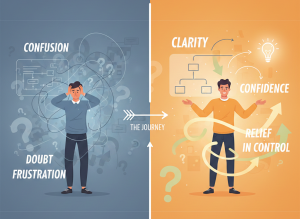
People connect with progress. Every story needs a sense of movement—a shift from one state to a better one. Your brand storytelling should consistently highlight this emotional journey.
- Highlight These Shifts:
- Confusion → Clarity
- Doubt → Confidence
- Frustration → Relief
- Overwhelmed → In Control
- Result: Your brand becomes associated with positive, meaningful change. You’re no longer just selling a tool; you’re selling a better outcome and a better feeling.
The Bottom Line: Purpose Over Polish
A strong brand story isn’t about clever taglines or one big campaign. It’s about a steady, grounded narrative rooted in purpose: the reason you exist beyond revenue, and customer reality: the genuine challenges and aspirations of the people you serve.

When you consistently show that you understand your customer’s world and can guide them through it, you build a connection that no competitor can easily copy. That’s the real power of a brand storytelling strategy.