For years, digital marketing has been dominated by sight: video, display, and social feeds. But in a world suffering from screen fatigue, the audience’s attention is shifting to the oldest, most intimate medium of all: audio.

Brands that are truly winning on platforms like Spotify and across the podcast ecosystem are looking past the standard 30-second pre-roll spot. They are moving from audio advertising to audio storytelling, embedding their identity into the listening experience itself.
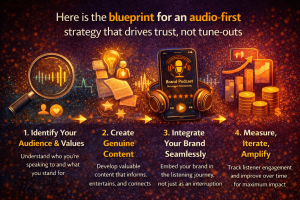
Here is the blueprint for an audio-first strategy that drives trust, not tune-outs.
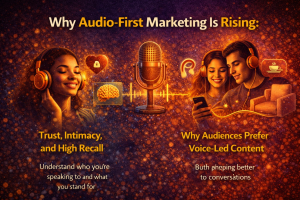
- Why Audio-First Marketing Is Rising
Audio is uniquely positioned in the modern media landscape. It doesn’t require a screen and accompanies the listener during key moments of their day: commuting, working out, or cooking.
- Trust, Intimacy, and High Recall: Listening through earbuds or in a car is a deeply personal experience. A human voice sharing a story fosters a connection that a fleeting video ad often cannot replicate. This intimacy leads to higher recall—listeners remember audio messages more than billboards.
- Why Audiences Prefer Voice-Led Content: Listeners actively choose their podcasts or playlists, creating a “lean-in” environment. When ads feel less intrusive and more integrated, they are welcomed as content, not interruptions.
- The Problem With Traditional Audio Ads
The basic programmatic audio ad is suffering from the same issues as banner blindness.
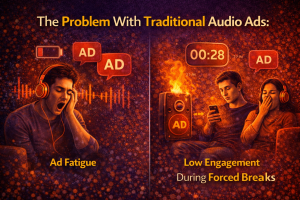
- Ad Fatigue: Repeatedly hearing the same, often generic, 15-30 second spot creates resentment and the immediate urge to skip (if possible).
- Low Engagement During Forced Breaks: Standard ads interrupt the flow of content, turning an active listening moment into a passive, screen-gazing moment, or worse, a moment of distraction.
- Branded Podcast Segments
Instead of buying a slot before or after an episode, a branded segment integrates the brand into the core content.
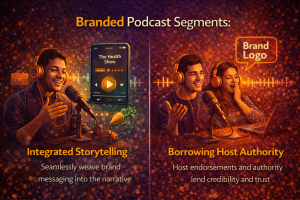
- Integrated Storytelling: The brand funds a recurring, relevant section of the show. For example, a financial services brand sponsoring “The Market Movers” segment where the host breaks down the week’s economic news.
- Borrowing Host Authority: The host, who has earned the listener’s trust, introduces the segment, effectively giving the brand their implicit endorsement. This is less like an ad and more like a collaboration. (See examples like Choiceology by Charles Schwab).
- Host-Read Native Mentions
This is the ultimate high-trust script. The key is to keep it natural and avoid the over-promotional tone.
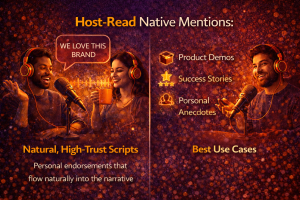
- Natural, High-Trust Scripts: The host reads the script in their own voice, often adding personal context or a quick anecdote about how they genuinely use the product. This makes the pitch feel like advice from a friend.
- Best Use Cases: Ideal for products that are easily integrated into the host’s lifestyle (e.g., productivity apps, meal kits, comfortable clothing, or specialized software).
- Sponsored Playlists
Spotify offers a unique, mood-based entry point for brands to connect with listeners who are not actively seeking conversation.
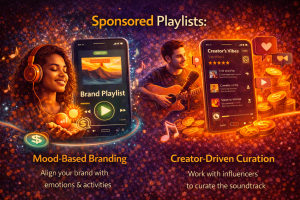
- Mood-Based Branding: A car manufacturer sponsors “The Ultimate Road Trip Playlist.” A coffee brand sponsors “Focus Flow: Deep Work Beats.” The brand owns the feeling and context of the listening moment, fostering a positive association.
- Creator-Driven Curation: Brands can partner with influential playlist curators on Spotify to access their ready-made, highly engaged audiences, ensuring the playlist content feels authentic to the listener. Sponsoring personalized playlists like “Discover Weekly” or “On Repeat” connects the brand with the user’s current music habits.
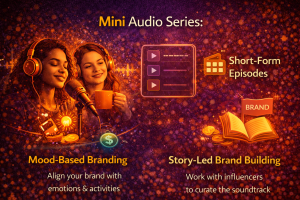
- Mini Audio Series
This is the branded content evolution of the blog post—creating short, episodic, and highly focused audio content.
- Short-Form Episodes: Episodes are typically 5-10 minutes long, designed for a micro-moment (like a morning commute). The content focuses entirely on educating or entertaining, with the brand taking a backseat.
- Story-Led Brand Building: Brands like GE have launched successful sci-fi podcasts (The Message) that never mention the product, but embody the brand’s spirit of innovation and technology.
- Sonic Branding
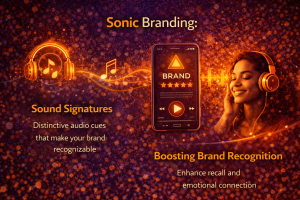
Sonic branding, or the creation of a recognizable sound signature, ensures your brand is recognized in screenless environments.
- Sound Signatures: This is the short, unique sound (or “audio logo”) that immediately cues your brand. It must be consistent across all audio touchpoints—ads, smart speaker interactions, and even phone hold music.
- Boosting Brand Recognition: When the sonic logo is effective, brands can achieve high recognition even without stating their name, as McDonald’s demonstrated in a recent campaign.
- Measuring What Matters
Clicks are a limited metric in audio. Success is measured by deeper, upper-funnel indicators.
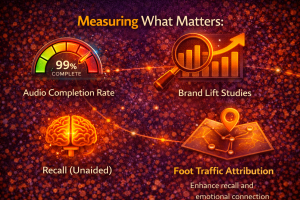
- Audio Completion Rate
- Why It Matters: Shows the percentage of ads heard fully (typically high, >90%).
- Measurement Tool: Streaming Platform Analytics
- Brand Lift Studies
- Why It Matters: Measures changes in awareness, favorability, and purchase intent between exposed vs. control groups.
- Measurement Tool: Third-party survey providers (Nielsen, Kantar)
- Recall (Unaided)
- Why It Matters: Measures if the audience remembers the brand or message without prompting.
- Measurement Tool: Post-campaign surveys
- Foot Traffic Attribution
- Why It Matters: For retail/physical goods, measures store visits after listeners are exposed to a geo-targeted ad.
- Measurement Tool: Location analytics platforms
- Common Mistakes
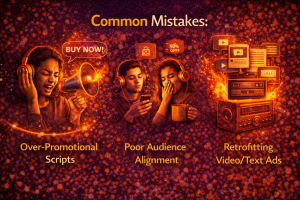
- Over-Promotional Scripts: Sounding like a loud, rushed radio announcer breaks the intimate connection of the platform.
- Poor Audience Alignment: Sponsoring a fitness podcast for an audience of retirees. The message must fit the mood and demographic.
- Retrofitting Video/Text Ads: An audio-first strategy means the message must be conceptualized for sound, not just copied from a video script.
- Your Audio-First Action Plan
Choosing Formats
- If budget is low & audience is niche: Start with Host-Read Native Mentions on a small, highly relevant podcast.
- If the goal is awareness & scale: Invest in Sponsored Playlists and a strong Sonic Brand.
- If the goal is thought leadership & trust: Commit to a Mini Audio Series or a Branded Podcast Segment.
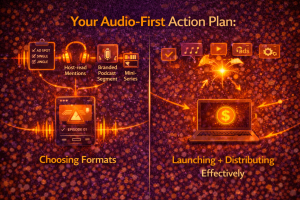
Launching + Distributing Effectively
Remember: Audio is not just distribution; it’s creation. You must align your tone, format, and content to the unique consumption habits of listeners to truly win outside of the standard ad slot.