


Let’s be honest. We’ve all been that traveler.
Sitting in a café in Rome, scrolling through a 27-page document trying to find the address of tonight’s restaurant… only to realize you’re staring at a hotel confirmation from a different country.
Your dream trip shouldn’t feel like admin work.
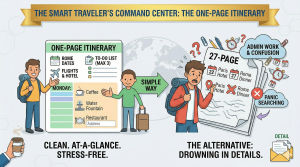
There’s a simpler way. It’s called the One-Page Itinerary — a clean, at-a-glance command center that keeps your entire trip organized without drowning you in details. Smart travelers swear by it. Minimalists love it. And once you try it, you won’t go back.

Here’s why it works — and how to build one.
Why One Page Beats Ten
We live in an age of information overload. The more tabs, PDFs, and confirmation emails you juggle, the more stressed you feel.
A single page forces clarity.
Less Stress
All critical details — flight times, hotel addresses, confirmation numbers — live in one place. No more panic-searching.
Better Planning
Seeing your days laid out clearly helps you avoid overbooking and rushing.
Easy Sharing
Screenshot it. Send it. Everyone stays aligned without forwarding 18 emails.
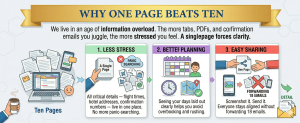
Simple equals calm.
The Structure of a Perfect One-Pager
Golden rule: this is a summary, not a novel.
Detailed confirmations stay in your email. This page is what you glance at while sipping coffee, deciding what’s next.
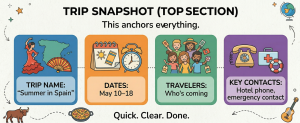
- Trip Snapshot (Top Section)
This anchors everything.
- Trip Name: “Summer in Spain”
- Dates: May 10–18
- Travelers: Who’s coming
- Key Contacts: Hotel phone, emergency contact
Quick. Clear. Done.
- Daily Flow (The Core)
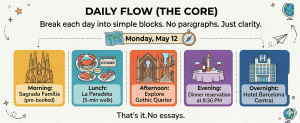
Break each day into simple blocks. No paragraphs. Just clarity.
Monday, May 12
- Morning: Sagrada Família (pre-booked)
- Lunch: La Paradeta (5-min walk)
- Afternoon: Explore Gothic Quarter
- Evening: Dinner reservation at 8:30 PM
- Overnight: Hotel Barcelona Central
That’s it. No essays.
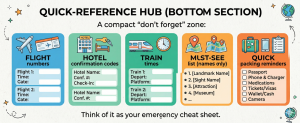
- Quick-Reference Hub (Bottom Section)
A compact “don’t forget” zone:
- Flight numbers
- Hotel confirmation codes
- Train times
- Must-see list (names only)
- Quick packing reminders
Think of it as your emergency cheat sheet.
5 Pro Hacks to Make It Even Better
- Research Smarter
- Check weather before finalizing plans.
- Fly early in the day to reduce delay risk.
- Eat where locals eat — use Google Maps reviews, not tourist menus.
Your one-pager should reflect smart decisions, not guesses.

- Build a Custom Google Map
Pin everything before your trip — hotels, cafes, museums.
Then group nearby spots together in your daily schedule.
Less zig-zagging. More exploring.
Your itinerary might simply say:
“Explore Gothic Quarter (see saved pins).”
Efficient and clean.

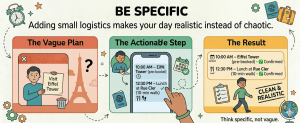
- Be Specific
Don’t write “Visit Eiffel Tower.”
Write:
10:00 AM – Eiffel Tower (pre-booked)
12:30 PM – Lunch at Rue Cler (10-min walk)
Adding small logistics makes your day realistic instead of chaotic.
- Go Digital — and Offline
- Store it in Google Drive.
- Download it offline.
- Screenshot it to your camera roll.
No Wi-Fi? No problem.

- Always Add Buffer Time
The biggest travel mistake? Scheduling every minute.Leave 30–60 minute gaps.That’s where coffee breaks, hidden streets, and unexpected magic happen.Your itinerary should guide you — not control you.

The Bottom Line
A one-page itinerary isn’t just about organization. It’s about freedom.It keeps you from missing reservations while leaving space to wander. It replaces chaos with clarity.
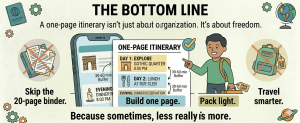
It turns stress into confidence.So next time you travel, skip the 20-page binder.Build one page.Pack light.Travel smarter.Because sometimes, less really is more.