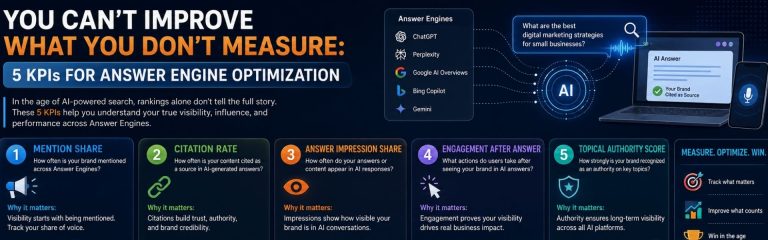

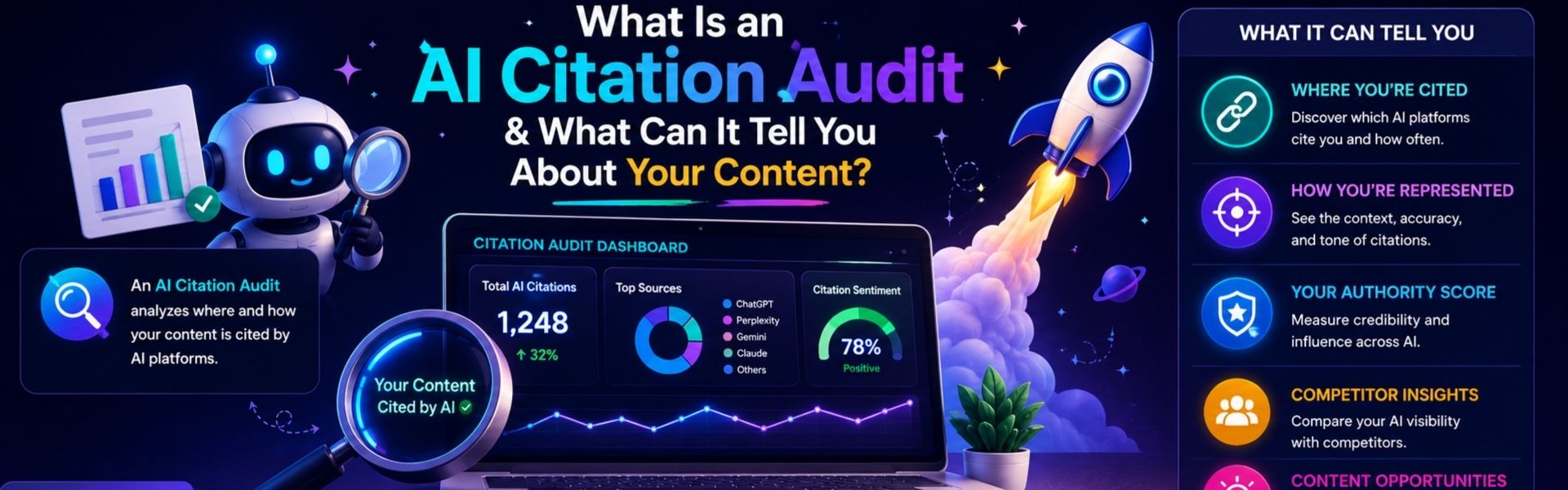
If you’ve been monitoring your brand’s presence using AI tools but find the insights lacking, the issue often lies in the initial setup.
Using generic prompts, incorrect measurement models, or inputs that don’t align with how actual buyers search can lead to unhelpful data.
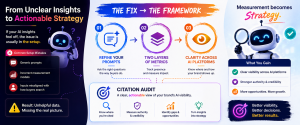
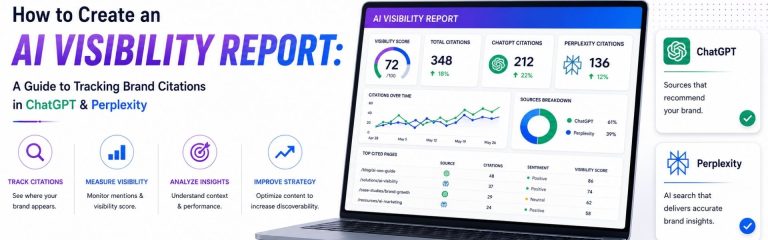
By refining your prompts, establishing two layers of metrics, and gaining clarity on your brand’s visibility across AI platforms, you can achieve a specific and actionable output: a citation audit. Understanding what an AI audit entails and its implications is where measurement transforms into strategy.
What the Citation Audit Actually Shows
After conducting a structured topical analysis, the methodology extracts citation data for the most promising topics on each platform. This data is categorized into three key dimensions.
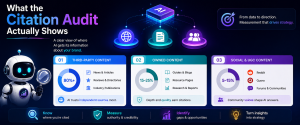
- Third-party Content: The majority of AI citations come from independent sources, often exceeding 80%. These citations refer to pages where your brand (or competitors) is mentioned in a broader context, rather than your own content.
- Owned Content: While it plays a smaller role than many expect, owned content still matters. Specific pages, especially in-depth guides, can earn citations. However, many brands focus on service pages and thin category content, which AI systems are less likely to cite when better third-party resources are available.
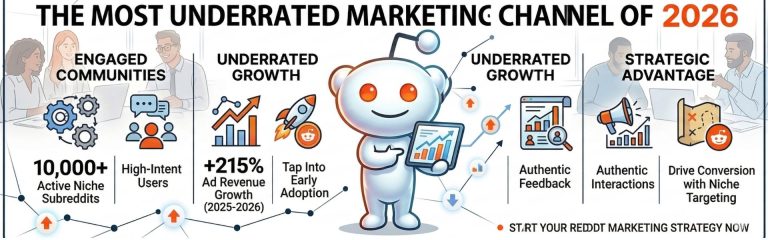
- Social and User-Generated Content (UGC): This is a smaller but growing area. Platforms like Reddit and Quora show up in citation data for topics involving peer experiences and community knowledge, representing an often overlooked channel for brands.
The Coverage Trap
To grasp the strategic importance of this, it’s essential to recognize the outdated coverage mindset that has dominated SEO content strategy for the past decade. This approach prioritized traffic, rewarding breadth over depth. The more questions you answered, the more pages you ranked, and the more traffic you captured.
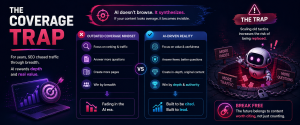
However, this model is faltering in an AI-driven landscape, and the citation audit highlights this shift. AI systems are designed to synthesize and summarize information. Content that merely answers broad questions is often absorbed into AI responses rather than cited as a source. If your content resembles what an AI would generate from a basic prompt, it has less incentive to cite you. This is the coverage trap: scaling the old model not only fails to enhance AI visibility but also increases the risk of being displaced.
What AI Systems Actually Cite
The citation audit reveals not just gaps but also patterns in what earns citations, consistently across topics and platforms. Citations are awarded to content that showcases genuine expertise in specific contexts, rather than simply being the biggest brand or highest-traffic page.
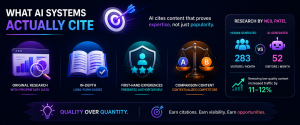
- Original research with proprietary data
- In-depth long-form guides
- First-hand experiences presented authoritatively
- Comparison content that contextualizes competitors
Educational long-form guides consistently outperform service pages. Content that includes competitors as examples within broader discussions garners more citations than content focused solely on the brand. Pages that address specific, high-intent questions with depth earn citations.
Research by Neil Patel indicates that human-generated content averages 283 visitors per month, compared to just 52 for AI-generated content across 68 sites with 744 articles. When lower-quality content was removed from their blog, they experienced an 11 to 12% traffic increase, underscoring that content quality is what truly drives results, regardless of its origin.
Three Actions That Close the Gap
The citation audit provides actionable insights for each topic cluster and platform, identifying the most effective actions to enhance visibility. These actions fall into three categories, each with varying resource needs and timelines:
- Digital PR: Earn third-party mentions by partnering with publishers that AI relies on and contributing expert commentary. This yields the fastest impact.
- Owned Content: Develop authoritative content such as comprehensive guides, comparison pages, and original data. This has a medium-term impact.
- Social / UGC: Establish credibility in spaces where buyers research before visiting your site. This has the longest runway.

Digital PR and third-party mentions are the most impactful activities for brands, addressing the common finding that most AI citations come from independent sources rather than owned pages. Investing in owned content is appropriate when the audit reveals genuine gaps in your owned pages, not just instances of being outperformed. Social and community engagement is crucial when visibility gaps stem from UGC signals, particularly in areas where buyers seek peer experiences and independent comparisons.
The Bigger Picture: Presence Over Position
Traditional search focused on position—ranking highly to earn traffic and convert at the margin. Visibility was a number: position one, page one, top ten. You knew your standing and optimized accordingly.
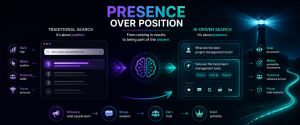
AI-driven search operates differently. Brands can influence what users learn about a category and shape answers to high-intent questions, all without appearing as a link. Visibility is no longer about rank; it’s about probability—how likely you are to be present when it matters.
Brands that grasp this shift early are gaining a competitive edge, not through new SEO tricks, but by investing in genuine authority within specific contexts. This authority is what AI systems consistently reference.
The VooTech Verdict
The AI citation audit is more than just another SEO report; it’s a strategic diagnostic tool that reveals where your brand is visible in the AI-driven discovery ecosystem—and where it isn’t. The key insight is clear: third-party sources account for the majority of AI citations. Competitors gain visibility through independent references, not their own content. High-volume, low-differentiation content faces the greatest risk of displacement in an AI environment.
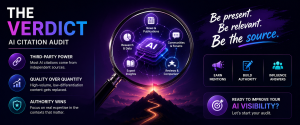
The focus of content strategy shifts from answering every question to establishing genuine authority in the contexts that matter to your buyers.
Ready to understand how AI systems perceive your brand? VooTech is here to help you navigate the complexities of AI visibility, citation tracking, and generative engine optimization. Contact us to begin your AI visibility audit today.