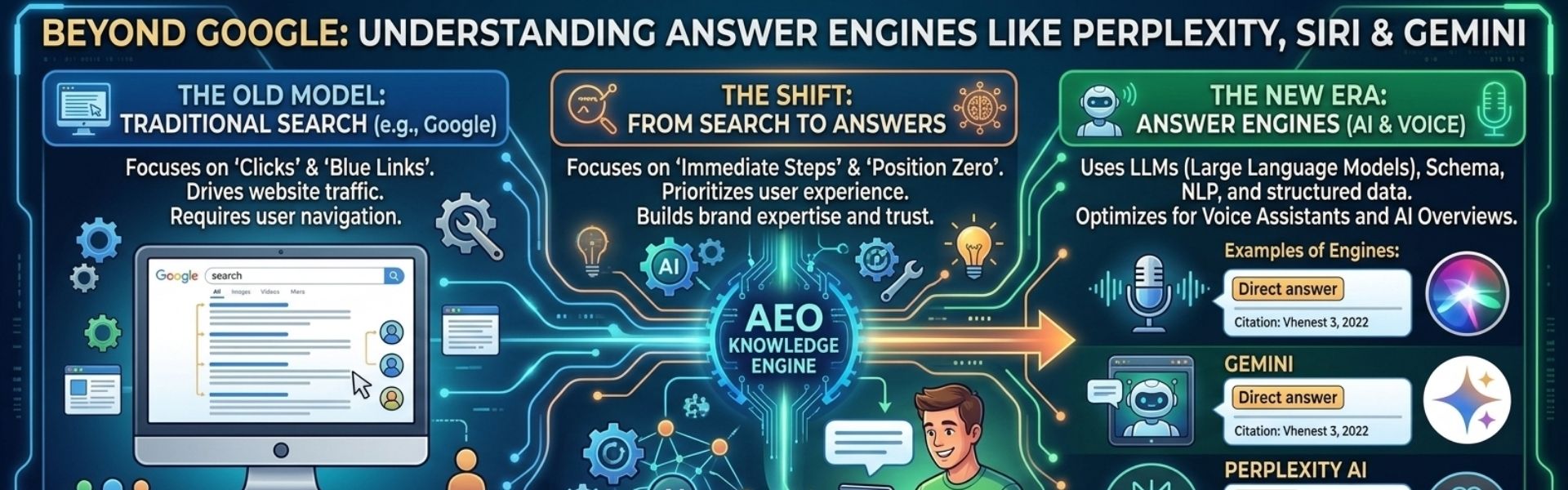
For decades, we’ve focused on optimizing for “10 blue links.” We chased rankings, obsessively monitored keyword density, and built backlink walls. But today, the search bar has transformed from a simple directory into a dynamic conversation.
Welcome to the era of Answer Engines. Whether you’re asking Siri to set a reminder, querying Perplexity for market insights, or using Gemini to clarify a complex topic, you’re engaging with technology that goes beyond just “finding” pages—it comprehends them.

At Vootech, we’re guiding brands to shift from merely ranking for keywords to becoming the “source of truth” for these AI systems. To excel in this new landscape, understanding the technology behind it is essential.
The Tech Under the Hood: How Answer Engines Think
Traditional SEO was all about matching text strings. In contrast, Answer Engines depend on semantic understanding. Here’s the tech stack that enables this:
- Natural Language Processing (NLP): This technology helps engines grasp the intent behind sentences, including nuances, slang, and context, rather than just identifying keywords.
- Semantic Search: Rather than searching for exact keyword matches, semantic search seeks the meaning behind queries, linking related concepts to deliver the most relevant answers.
- Knowledge Graphs: Imagine this as a digital brain—a vast, interconnected map of “entities” (people, places, things) and their relationships. For instance, if you search for a celebrity, the knowledge graph provides details like their birthdate and filmography without requiring you to click a link.
- Entity-Based Indexing: Instead of indexing pages by keywords, engines now index based on “entities.” When your content establishes your brand as an authority on a specific entity, the engine is more likely to use your content as its definitive answer.
Beyond Google: The Platforms You Must Optimize For
Optimization is no longer a one-size-fits-all approach. While Google remains a major player, the landscape of “Answer Engines” is diverse. To be the authoritative voice, you need to be present on these platforms:

- Perplexity AI & ChatGPT Search
These platforms are the gold standard for research, synthesizing information from multiple sources into cohesive answers.
How to optimize: Focus on high-authority, fact-dense content. Use clear, objective language and ensure your site is logically structured. - Voice Assistants (Siri, Alexa, Google Assistant)
Voice search is conversational and typically results in one definitive answer.
How to optimize: Target “long-tail” conversational queries. Implement Schema Markup to help these assistants extract quick facts like store hours or product specifications. - Microsoft Bing (with Copilot)
Bing pioneered the integration of generative AI into search, making it crucial for B2B brands.
How to optimize: Ensure your technical SEO is impeccable. Bing’s AI favors sites that are highly crawlable and transparent about their data sources.
Why “Entity Authority” is the New Backlink
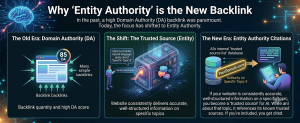
In the past, a high Domain Authority (DA) backlink was paramount. Today, the focus has shifted to Entity Authority. If your website consistently delivers accurate, well-structured information on a specific topic, you become a “trusted source” for AI. When an AI is asked about that topic, it references its known trusted sources. If you’re included, you get cited.
The Vootech Approach: Are You the Answer?
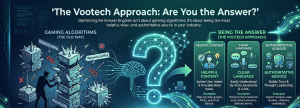
Optimizing for Answer Engines isn’t about gaming algorithms; it’s about being the most helpful, clear, and authoritative source in your industry.
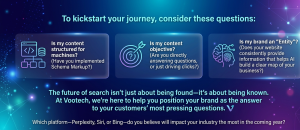
To kickstart your journey, consider these questions:
- Is my content structured for machines? (Have you implemented Schema Markup?)
- Is my content objective? (Are you directly answering questions, or just driving clicks?)
- Is my brand an “Entity”? (Does your website consistently provide information that helps AI build a clear map of your business?)
The future of search isn’t just about being found—it’s about being known. At Vootech, we’re here to help you position your brand as the answer to your customers’ most pressing questions.
Which platform—Perplexity, Siri, or Bing—do you believe will impact your industry the most in the coming year?