
For years, marketers have pondered a crucial question: does visibility in AI-generated answers lead to real business results?
New research from Similarweb, with insights from SparkToro’s Rand Fishkin, provides the first solid evidence to answer this question. The short answer is yes—but the implications may surprise you.
The Direct Impact: AI Recommendations Drive Real Traffic
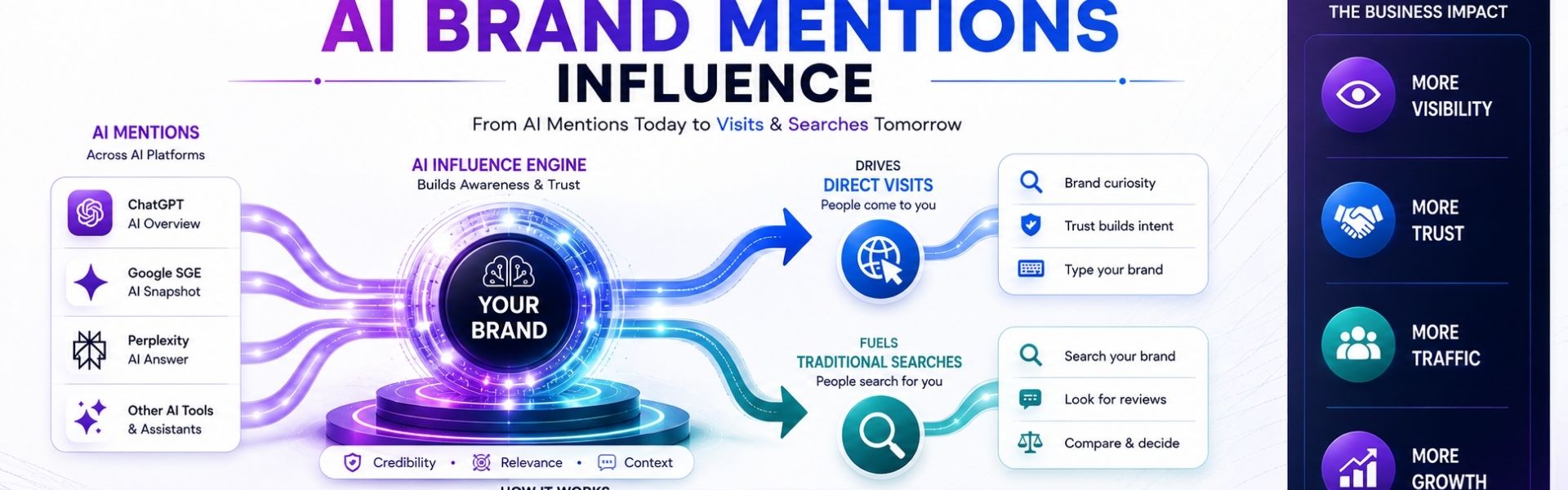
The Similarweb study examined various consumer industries, including finance, travel, and beauty, to see what happened after AI tools recommended specific brands. The results were striking: direct visits and branded search volume for mentioned companies increased significantly compared to those that were not mentioned.
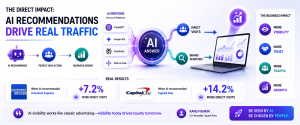
For instance, when AI suggested American Express in discussions about credit card options, visitors were 7.2% more likely to visit the American Express website. When Capital One was recommended, the increase was even more pronounced at 14.2%.
This indicates that AI-generated answers have a tangible effect on consumer preferences. As Rand Fishkin pointed out, this is reminiscent of traditional advertising from the twentieth century—visibility leads to later consumption and brand loyalty.
The Attribution Challenge: How AI Traffic Hides in Plain Sight
However, the situation becomes complex. Much of the traffic influenced by AI remains hidden in your analytics.
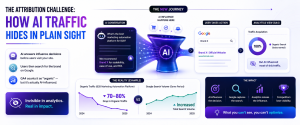
A major B2B marketing automation platform saw a 70–80% drop in organic traffic between 2024 and 2025, even as Google’s total search volume rose. The reason? AI is capturing traffic before it reaches websites, influencing purchase decisions within conversational interfaces, and then directing users to Google to search for the brands recommended by AI. GA4 categorizes this as “organic,” but it’s actually AI-influenced.
The Branded Search Misattribution Cascade
A significant attribution issue lurks within your branded search data. Research from Position Digital revealed that ChatGPT usage increased users’ Google searches to 12.6 sessions per week, up from 10.5 before adopting ChatGPT.
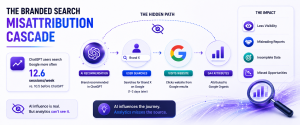
When someone receives a brand recommendation from ChatGPT and then searches for that brand two days later, GA4 attributes it to Google organic traffic. The AI influence remains completely unrecognized.
The Noreferrer Problem
To complicate matters further, ChatGPT’s paid accounts utilize a noreferrer HTML attribute on outbound links, preventing the browser from passing the origin URL to the destination website. Paid ChatGPT users—who exhibit stronger intent—show up as “direct” traffic in GA4.
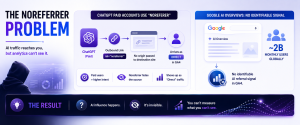
Google AI Overviews, which reach around 2 billion monthly users globally, generate no identifiable AI referral signals in GA4. Consequently, distinguishing AI Overviews traffic from standard Google organic search is impossible.
The Data Behind AI Traffic Quality
Despite these attribution challenges, the conversion data is compelling:
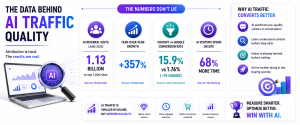
- AI referral visits (June 2025): 1.13 billion to top 1,000 sites (Source: Similarweb)
- Year-over-year growth: +357% (Source: Similarweb)
- ChatGPT vs Google conversion: 15.9% vs 1.76% (~9x) (Source: Seer Interactive)
- AI visitors spend: 68% more time on websites (Source: SE Ranking)
AI platforms pre-qualify visitors during conversations. By the time someone clicks through from a ChatGPT response, they’ve already received a recommendation, understood the context, and formed intent. They arrive further along in the decision-making process than a typical search visitor still weighing options.
How to Actually Measure AI Influence
To bridge the measurement gap, a multi-layered approach is essential:
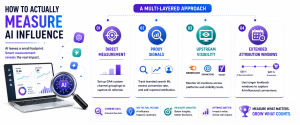
- Direct Measurement: Set up GA4 custom channel groupings to capture identifiable AI referrals. While this won’t catch everything, it’s a starting point.
- Proxy Signals: Monitor branded search lift, excess conversion rate analysis, and self-reported attribution. If your branded search volume is rising while organic is declining, AI influence is likely at play.
- Upstream Visibility Monitoring: Track AI mentions across platforms using tools like SEMrush’s AI Visibility Index, SparkToro, or Yoast AI Brand Insights.
- Extended Attribution Windows: AI-influenced purchases often occur days or weeks after the initial recommendation. Your attribution model should accommodate longer lookback windows.
What This Means for Your Strategy
Brand mentions in AI answers lead to real business outcomes—direct traffic, branded search, and high-quality conversions. However, traditional analytics tools often overlook this channel.
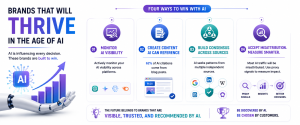
Brands that will thrive are those that:
- Actively monitor their AI visibility across platforms
- Create content that AI can reference (62% of AI citations come from blog posts)
- Build consensus across third-party sources—AI seeks patterns from multiple independent sources
- Acknowledge that most AI traffic will be misattributed and develop proxy measurement frameworks
Ready to understand how AI systems perceive your brand? VooTech assists businesses in navigating the intricate landscape of AI visibility, attribution, and digital transformation. Contact us to initiate your AI visibility audit today.