
If you’re still obsessing over keyword density and backlink counts from 2024, I have some tough news: you’re optimizing for a ghost.
In April 2026, the search landscape has undergone its most violent transformation since the invention of the crawler. The “10 Blue Links” that defined the internet for three decades are effectively dead. Today, search isn’t a list of destinations; it’s a conversation.
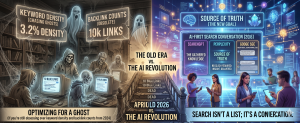
With Perplexity, SearchGPT, and Google’s evolved Search Generative Experience (SGE) now the default interfaces for billions, the goal is no longer to get a “click.” The goal is to be the Source of Truth.
AI Search Has Killed the 10 Blue Links
For thirty years, SEO was about winning a race to the top of a list. In 2026, the “list” is hidden behind an AI-generated summary.
When a user asks, “What are the best boutique hotels in Ras Al Khaimah for a road trip?”, the AI doesn’t give them a list of travel blogs to click on. It gives them a synthesized itinerary, pulls in real-time pricing, and shows a 3D preview of the rooms.
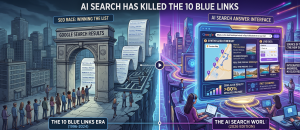
The “Zero-Click” Reality: Over 80% of searches in 2026 are resolved directly on the search results page. If your content is just “filler” designed to rank, the AI will scrape your facts, give the user the answer, and never send you a single visitor.
The New Rules: From SEO to GEO (Generative Engine Optimization)
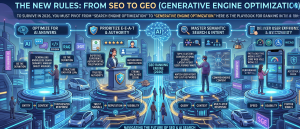
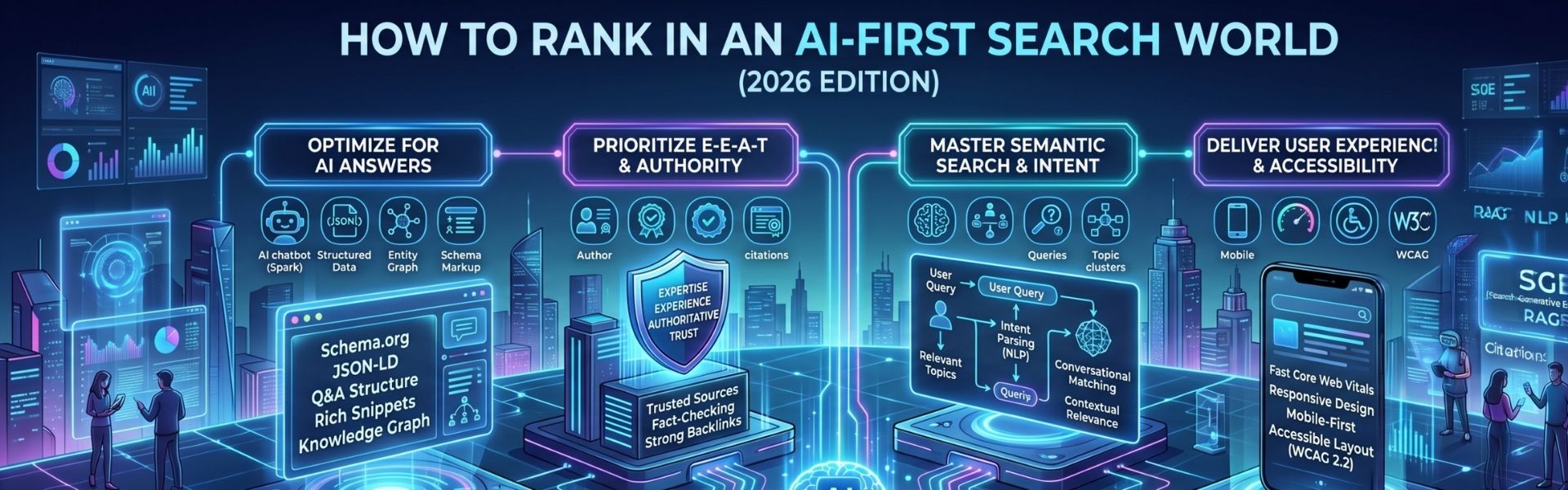
To survive in 2026, you must pivot from “Search Engine Optimization” to “Generative Engine Optimization.” Here is the playbook for ranking in the AI era:
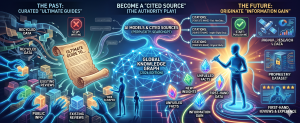
- Become a “Cited Source” (The Authority Play)
AI models are now legally and technically mandated to provide citations. To show up in a Perplexity or SearchGPT answer, your content needs to be uniquely factual. * Stop: Writing “Ultimate Guides” that curate existing info.
- Start: Publishing original research, proprietary data, and first-hand reviews. AI favors sources that provide “Information Gain”—content that adds something new to the global knowledge graph that wasn’t there before.
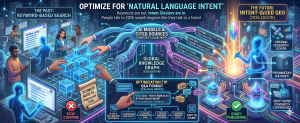
- Optimize for “Natural Language Intent”
Keywords are out; Intent Clusters are in. People talk to 2026 search engines like they talk to a friend.
- Optimization Tip: Structure your content in a Q&A format that mirrors human dialogue. Use clear, declarative sentences. The easier it is for an AI to “chunk” your data, the more likely it is to be used in a summary.
- The Rise of Brand Sentiment & “Vibe”
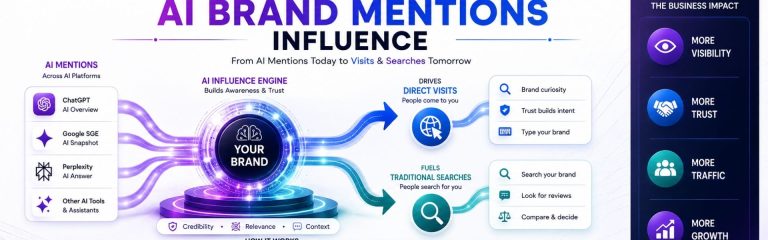
AI models don’t just look at code; they look at sentiment. They pull from social media, Reddit, and YouTube to determine if a brand is trustworthy.
- The Strategy: In 2026, your “off-page SEO” is actually your Brand Reputation. If the consensus across the web is that your product is high-quality, the AI will recommend you. If your mentions are mostly complaints, the AI will filtered you out—no matter how good your technical SEO is.
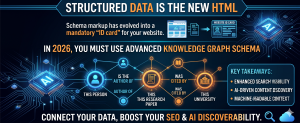
- Structured Data is the New HTML
Schema markup has evolved into a mandatory “ID card” for your website. In 2026, you must use advanced Knowledge Graph Schema. This tells the AI exactly how your data points connect (e.g., this person is the Author of this Research Paper which was Cited by this University).
The Content “Golden Rule” for 2026
If an AI can rewrite your article in five seconds and provide the same value, your article has no reason to exist.
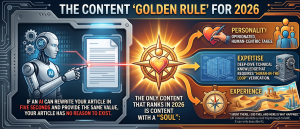
The only content that ranks in 2026 is content with a “Soul”:
- Personality: Opinionated, human-centric takes.
- Expertise: Deep-dive technical knowledge that requires “Human-in-the-Loop” verification.
- Experience: “I went there, I did this, and here is what happened.” (AI cannot simulate a road trip through the UAE; it can only describe it).
Bottom Line: Don’t Fight the AI, Feed It
Traditional SEO is dying, but Discovery is thriving. In 2026, you aren’t trying to trick an algorithm; you are trying to be the most helpful, cited, and reputable source in your niche.
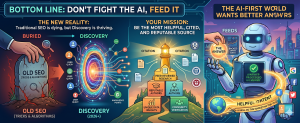
The AI-first world doesn’t want more content; it wants better answers. Provide the answer, back it up with data, and the AI will do the marketing for you.