
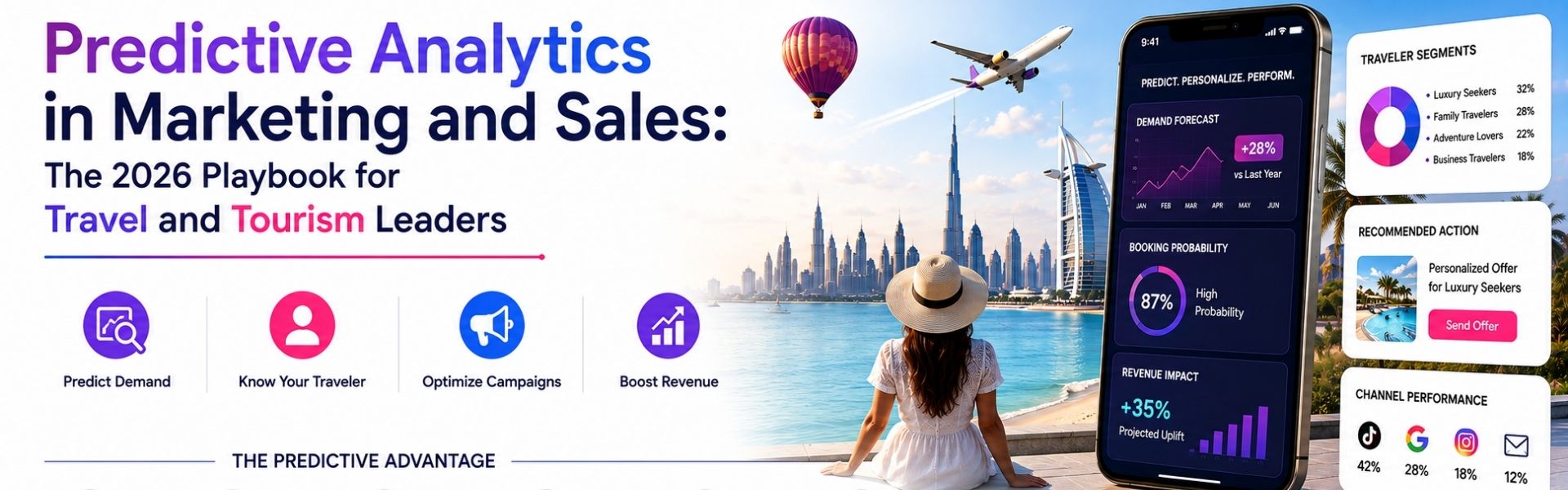
In 2026, travel and tourism leaders are no longer questioning the relevance of predictive analytics; they are focused on how quickly they can integrate it into their core operations.
Predictive analytics has evolved from a mere curiosity to a fundamental component for airlines, rail operators, cruise lines, and hospitality chains.
The brands that are gaining a competitive edge are those treating predictive analytics as essential infrastructure rather than just a dashboard feature. This playbook outlines the successful strategies of 2026, highlights industry leaders, and identifies common pitfalls that many travel executives still encounter.
Why Travel and Tourism Became the Proving Ground
The travel industry is particularly unforgiving when it comes to inaccurate forecasting. With countless routes, millions of passengers, unpredictable weather, fluctuating fuel prices, and narrow profit margins, the stakes are high. This environment has led airlines and rail operators to pioneer techniques like dynamic pricing and customer segmentation long before other sectors caught on.
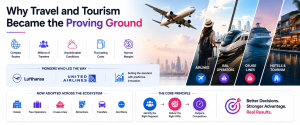
The successful strategies developed by companies like Lufthansa and United Airlines are now being adopted by hotels, tour operators, and cruise lines. The core principle remains the same: identify the customer segment, deliver the right offer, and outpace competitors in real-time.
Predictive Analytics Across the Travel Stack
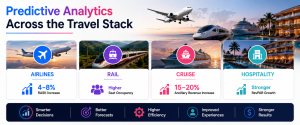
Here’s how predictive analytics is utilized in various travel sectors:
- Airlines: Dynamic pricing and load forecasting lead to a 4-8% increase in revenue per available seat kilometer (RASK).
- Rail: Demand prediction and schedule optimization result in higher seat occupancy rates.
- Cruise: Predicting onboard spending and segmenting loyalty programs can boost ancillary revenue by 15-20%.
- Hospitality: Forecasting length of stay and targeting upsells contribute to stronger revenue per available room (RevPAR) growth.
Operating a modern transport business without a sophisticated analytical framework is nearly impossible.
Predictive Analytics in Marketing: From Segmentation to Real-Time Personalization
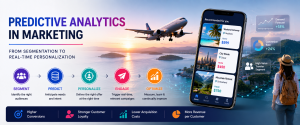
Travel marketing teams have access to a wealth of behavioral data. Every search, fare comparison, and loyalty redemption provides valuable insights. The challenge lies in transforming this data into timely, personalized actions.
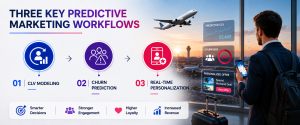
Three key predictive marketing workflows dominate the landscape:
- Customer Lifetime Value (CLV) modeling informs loyalty tier design and marketing budget allocation.
- Churn prediction identifies customers at risk of switching to competitors.
- Real-time personalization tailors offers and suggestions as customers browse.
Air France: A Blueprint for Predictive CRM
Air France has revolutionized its customer relationship management (CRM) by leveraging predictive intelligence. With a goal to be the preferred choice for all travel plans by 2026, the airline has integrated predictive AI across all destinations.
By 2025, Air France utilized predictive AI to cover all its destinations, moving beyond historical data to anticipate future customer intentions based on browsing behavior, travel history, and loyalty status. The results have been impressive:
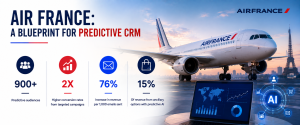
- Over 900 predictive audiences created.
- Campaigns targeting these audiences saw doubled conversion rates.
- A 76% increase in revenue per 1,000 emails sent.
Air France has also expanded its predictive capabilities beyond ticket sales, with nearly 15% of revenue now coming from ancillary options, driven by predictive AI recommendations.
The Human Layer: Why AI Works Alongside, Not Instead of, People
As AI becomes more integrated into travel operations, its impact on organizational roles is significant. While AI can automate routine tasks, the human element remains crucial for trust and complex decision-making.

Industry leaders emphasize that AI should be viewed as a teammate, enhancing efficiency without replacing the human touch. The future of travel will see AI and humans working together, rather than competing against each other.
How VooTech Helps Travel and Tourism Leaders Operationalize Predictive Analytics
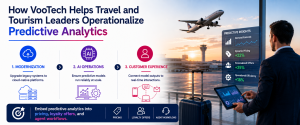
Many travel enterprises struggle with predictive analytics not due to a lack of ambition, but because of the significant gap between proof-of-concept models and fully integrated systems. VooTech addresses this gap by assisting travel leaders in three key areas:
- Modernization: Upgrading legacy systems to cloud-native platforms that support modern analytics.
- AI Operations: Ensuring predictive models run reliably at scale.
- Customer Experience: Connecting model outputs to real-time interactions across various touchpoints.
The companies that will thrive in 2026 are those that embed predictive analytics into their operational core, making it an integral part of pricing, loyalty offers, and agent workflows.
The VooTech Verdict
Predictive analytics has become the standard for travel and tourism brands aiming for leadership. While some are still debating the ROI of data warehouses, leaders are already reaping the benefits of advanced predictive architectures.
The gap between leaders and laggards is widening, and the question for travel executives is no longer whether to invest in predictive analytics, but whether their current partners can deliver effective execution.
Ready to explore how predictive analytics can transform your travel business? VooTech is here to guide you through the complexities of AI, data integration, and digital transformation. Contact us to embark on your journey today.