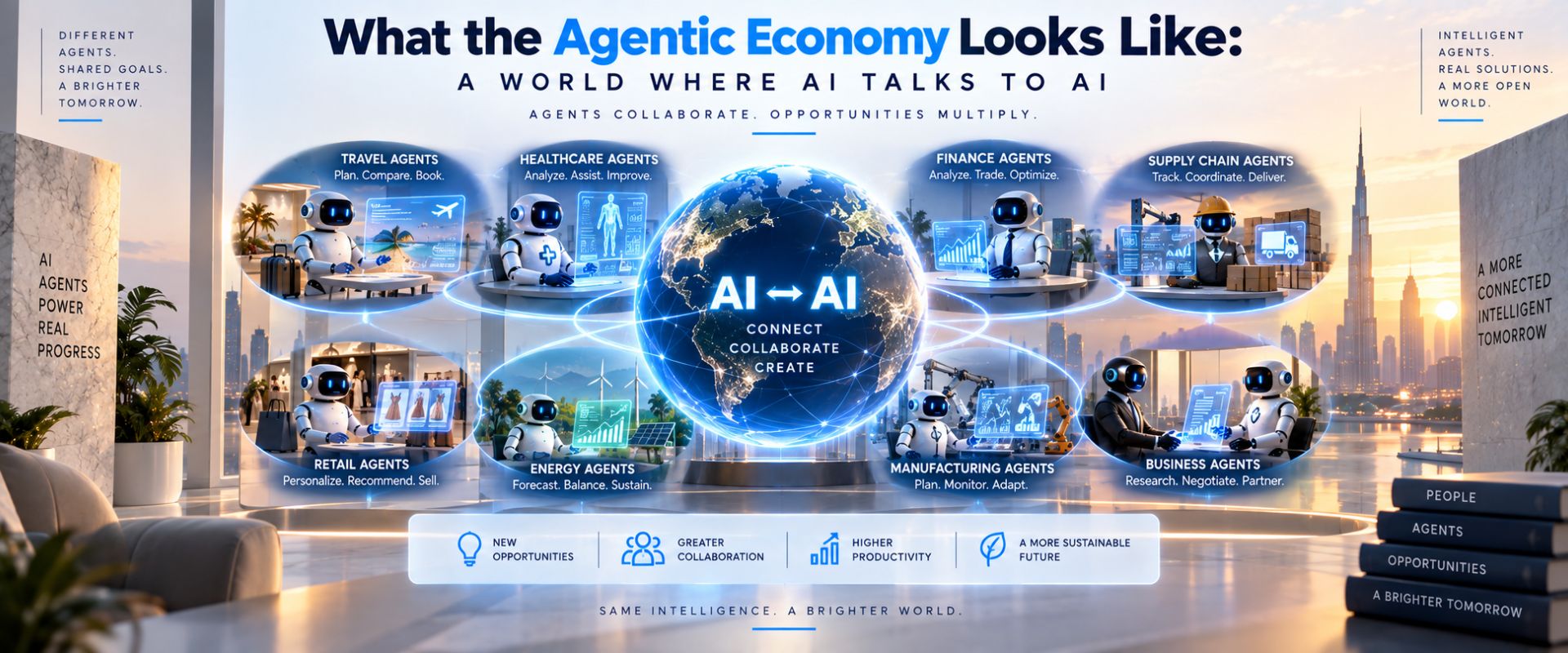
The agentic economy is no longer a distant future; it’s already here, albeit unevenly distributed.
As Meta’s CMO Alex Schultz pointed out, this new economic landscape goes beyond mere chatbots and automation. In this world, every consumer and business has AI agents working tirelessly on their behalf—negotiating, transacting, and coordinating directly with one another, 24/7, without human intervention.
This isn’t just a concept from science fiction. It’s the logical outcome of the ongoing protocol wars between entities like Anthropic’s MCP and Google’s A2A. Once these agents can reliably discover and communicate with each other, the next question arises: what happens when they start doing business together?
The answer is an entirely new economic layer that requires fresh infrastructure, trust mechanisms, and legal frameworks. This is the essence of the agentic economy.
The Mundane Example That Changes Everything
Schultz’s most relatable illustration of the agentic economy is a child’s birthday party. Picture agents booking venues, checking calendars, and coordinating with other parents’ agents—all seamlessly happening on WhatsApp. This seemingly mundane example is crucial because it makes the abstract concept of autonomous economic agents feel immediate and tangible. You don’t need to understand complex protocols to grasp that your agent will one day negotiate with a vendor’s agent over party supplies.
When scaled up, this logic applies to supply chain negotiations, cross-border commerce, and financial transactions—all occurring agent-to-agent. The infrastructure that manages a birthday party can also handle a procurement contract. The protocols are indifferent to the stakes; they focus on the format.
Every Consumer, Every Business, an Agent
Schultz’s core prediction is straightforward yet profound: “Every consumer and every business will have an agent or set of agents that represent them, creating a full agentic economy.” This isn’t just theoretical; Meta already has over a million weekly active businesses utilizing Meta agents, performing real tasks like answering questions and managing transactions in any language, at any hour.
Imagine personal agents monitoring home video feeds, identifying broken hardware, and automatically completing purchases. These agents aren’t merely reactive; they’re proactively managing their owners’ interests.
The scale of this shift is immense. When a million businesses each have an agent, the potential interactions multiply exponentially. No human-designed API economy could manage that complexity, but a protocol-driven agent economy can.
The Trust Problem: Knowing Your Agent Represents Who It Says
For this economy to function, a critical issue must be addressed: verification. As Schultz noted, “For you to transact with an agent, you need to know it represents the business it claims to represent.” This verification layer is essential; without it, agent-to-agent commerce could become a breeding ground for fraud.

Schultz candidly acknowledged Meta’s limitations in this area, expressing a desire for decentralized verification systems that could enhance trust. This is significant, as it shows that even a giant like Meta recognizes the need for neutral infrastructure that no single company controls.
Emerging projects like GoDaddy’s Agent Name Service (ANS) are laying the groundwork for agent marketplaces, providing verified identities and cryptographic trust. On the blockchain side, EIP-8004 establishes a registry system for agent discovery, reputation, and validation, ensuring that each agent has a portable, verifiable identity.
The App Store for Agents
Schultz drew a parallel to the infrastructure humans take for granted: “Where we built an app store for humans, we need an app store for agents.” The timeline for agent marketplaces is already being mapped out, with projections indicating that by 2026, thousands of agents will launch, and by 2030, tens of millions could form an economy rivaling the SaaS market.
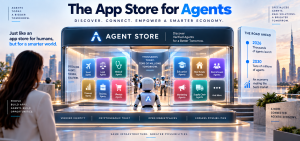
These marketplaces will vary, with general-purpose platforms coexisting alongside specialized ones for legal, medical, and financial agents. All will rely on the same foundational layer of verified identity and cryptographic trust.
The Legal Gap: When No Human Signs the Contract
Schultz highlighted a significant challenge: existing legal structures assume a human is involved in transactions. In the agentic economy, this assumption may no longer hold. When agents negotiate contracts, who is legally responsible if something goes awry? Current laws lack clear answers.
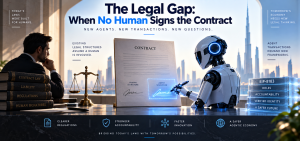
The research community is already addressing this issue, with frameworks like EIP-8183 attempting to formalize roles in agent transactions. This legal frontier requires innovative mechanisms for accountability that can operate at machine speed.
The Payments Layer: Stablecoins and the Walletless Future
Schultz emphasized the importance of payments, stating, “We completely believe in the future of there being no wallets and digital payments being the whole future.” The payment layer in Meta’s vision relies on stablecoins, with Meta acting as the interface while regulated third-party stablecoins handle settlements.

This reflects a broader shift, as Meta already has millions of small businesses in Brazil and India conducting commerce via WhatsApp. The payments question is crucial for the agentic economy; agents need efficient transaction methods to thrive.
What This Means for Builders
Schultz warned builders in the agentic economy: “Agents are the dumbest they’re ever going to be.” As large language models become commoditized, the competitive edge will lie in proprietary data and specialized knowledge.

Builders should focus on:
- Proprietary data that enhances agent intelligence.
- Establishing trust relationships through verified identities and reputation systems.
- Creating legal structures that protect users and ensure accountability.
The Infrastructure Stack of the Agentic Economy
The agentic economy requires a comprehensive stack:
- Identity Layer: Agent cards, registries, and verification protocols.
- Communication Layer: Protocols for agent interaction.
- Trust Layer: Reputation systems and cryptographic proofs.
- Payment Layer: Stablecoins and programmable money.
- Legal Layer: Liability frameworks and compliance infrastructure.
- Application Layer: The agents themselves.
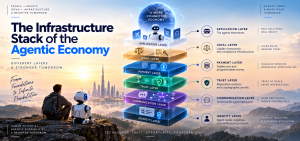
Each layer relies on the ones below it, creating a robust foundation for the economy.
The Timeline
The infrastructure is currently being developed, with identity registries, reputation systems, and payment rails in their early stages. The builders who shape these foundations will determine the future of the agentic economy.
Schultz’s message is clear: “If you grab hold of this moment, you can steal a march on your competitors.” The future is here, waiting for the infrastructure to catch up.
Conclusion: The Economy That Runs Itself
The agentic economy represents a new kind of market—one where participants are autonomous, transactions are instantaneous, and the infrastructure is protocol-driven. It’s the logical conclusion of the protocol wars. Once agents can communicate and transact, they will need identity, trust, payments, and legal frameworks. When these elements are in place, the economy will run itself.

Schultz’s birthday party example serves as a perfect entry point into this concept. It’s relatable and deceptively simple, yet when scaled up, it reveals the future of supply chains, financial markets, and global commerce.
Every consumer and business will become an agent, negotiating, transacting, and coordinating in this emerging agentic economy. The infrastructure is being built, and the question is not if it will happen, but who will lead the charge—and who will be left behind.